A Professional Comparison Between Chinese and Philippine Windows: Climate, Culture, Craft and Contemporary Trends
Windows are essential architectural components that integrate functionality, aesthetics, and cultural identity. They are deeply shaped by geography, climate, building traditions, and social needs. This article provides a professional, structured comparison between windows in China and the Philippines, analyzing their differences in typology, material, performance, cultural meaning, and developmental trends,
1. Climate Adaptation: The Fundamental Logic of Window Design
Climate is the primary determinant of window form and performance. China covers a vast territory with diverse climate zones, including frigid, temperate, subtropical, and tropical regions. Northern Chinese windows prioritize thermal insulation and wind resistance to cope with cold, dry winters. Windows are relatively small, deeply set, and often double‑layered to reduce heat loss. Southern Chinese windows emphasize ventilation, sun shading, and moisture resistance to adapt to hot, humid summers and heavy rainfall. Larger openings with lattice structures balance air flow, light transmission, and privacy.
The Philippines has a consistent tropical monsoon climate characterized by high temperatures, heavy humidity, year‑round rainfall, and frequent strong typhoons. Window design is universally oriented toward high‑efficiency ventilation, rain protection, heat insulation, and typhoon resistance. Large openable areas, adjustable louvers, and reinforced structures are standard to ensure air circulation while preventing rain penetration and resisting extreme wind loads.
2. Traditional Window Typologies and Craftsmanship
2.1 Traditional Chinese Windows
Traditional Chinese windows are represented by wooden lattice windows (chuanghua). Typical types include straight lattice windows, removable support windows, and decorative geometric windows. They use high‑quality hardwood such as elm, cedar, and nanmu, relying on precise mortise‑and‑tenon joints without metal fasteners. Lattice patterns are not only decorative but also carry rich cultural symbolism, representing luck, longevity, and social ethics. Classical garden windows often use “view framing” to integrate landscape into interior space, expressing oriental poetic aesthetics.
These windows balance light, ventilation, and privacy. Window paper or silk screens diffuse light while blocking sightlines. In southern regions, deep eaves and raised sills enhance rain protection. Traditional Chinese windows reflect Confucian order, Taoist harmony, and Feng Shui principles, making them cultural carriers as well as functional components.
2.2 Traditional Philippine Windows
Philippine traditional windows are marked by capiz shell windows and colonial‑influenced louvered designs. Capiz Shell, a translucent natural material, is embedded in wooden frames to provide soft, diffused light while maintaining privacy. Another iconic type is the Ventanilla, a small louvered window installed below the main sash to enhance air flow.
Jalousie or horizontal louver windows are widely used because they can be adjusted to control ventilation and rain penetration. These forms evolved from the indigenous Bahay Kubo and were refined under Spanish colonial rule in Bahay na Bato structures. They use local hardwood, bamboo, and capiz, emphasizing lightweight, openable structures suitable for hot, humid environments. Philippine traditional windows reflect indigenous resourcefulness and hybrid cultural identity.
3. Material, Structure and Performance Differences
3.1 Materials
Modern Chinese windows widely adopt thermal‑break aluminum profiles, insulated glass, and EPDM weatherstripping. High‑rise buildings and energy‑efficient projects use triple‑silver Low‑E glass, vacuum glass, and aerogel composites to improve thermal and sound insulation. Wooden windows are preserved mainly in cultural restoration and high‑end custom projects.
In the Philippines, aluminum alloy is the dominant modern material due to its corrosion resistance and affordability. uPVC windows are used in low‑cost residential projects but suffer from deformation under strong sunlight. Traditional capiz is now limited to high‑end cultural and heritage applications. Coastal projects use anti‑corrosion fluorocarbon coatings to resist salt spray.
3.2 Structural Performance
Chinese windows emphasize multi‑climate adaptability: high air tightness, water tightness, wind resistance, and thermal insulation. Northern windows focus on heat retention; southern windows emphasize sun shading and moisture protection. High‑performance windows reach U‑values as low as 1.3–1.8 W/(㎡·K), with air tightness Grade 6 and wind resistance Grade 9.
Philippine windows prioritize typhoon resistance and ventilation. Wind‑resistant design complies with local building codes, requiring reinforced frames, multi‑point locks, and impact‑resistant glass. Drainage channels and weather‑resistant seals are standard to cope with heavy rain. Thermal‑break technology is gradually adopted in mid‑to‑high‑end projects to reduce solar heat gain.

3.3 Opening Methods
Common opening types in China include casement, sliding, top‑hung, and intelligent electric windows. Casement windows offer better air tightness; sliding windows save space. Intelligent windows with rain sensors, remote control, and smart home linkage are increasingly popular in high‑end markets.
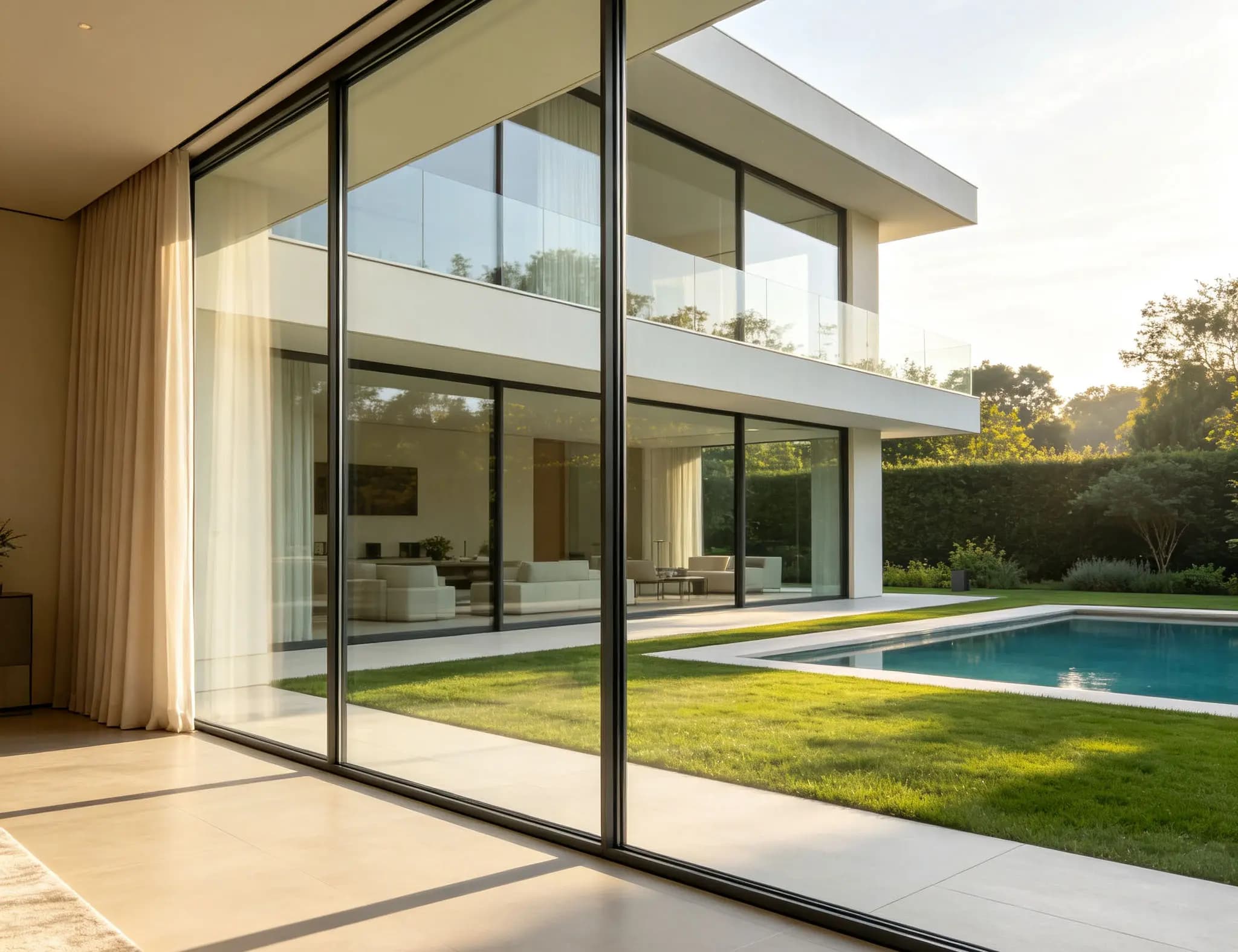
In the Philippines, sliding and awning windows are most common. Awning windows provide excellent rain protection and ventilation. Louvered windows remain practical for low‑cost housing. Large narrow‑frame sliding windows are rising in high‑end real estate for better view and indoor–outdoor connection.
4. Cultural Meaning and Aesthetic Differences
Chinese windows carry strong cultural symbolism and spatial philosophy. Lattice patterns convey auspicious meanings; window design follows principles of balance, order, and harmony. Modern designs often reinterpret traditional motifs using aluminum and glass, creating a contemporary new Chinese aesthetic.
Philippine windows express tropical hospitality and cultural hybridity. Capiz windows symbolize local marine culture; large openable windows support social interaction and community connection. Colonial architectural elements blend with indigenous practices, forming a unique tropical architectural language.
5. Modern Development Trends
5.1 Trends of Chinese Windows
– High performance and energy efficiency: Driven by national dual‑carbon goals, passive‑house‑level windows are increasingly applied.
– Intelligent integration: Electric control, sensor auto‑closing, and smart home linkage become standard features.
– Cultural revival: Traditional lattice patterns are modernized and modularized for mass application.
– Stock renovation and industrial upgrading: Old window replacement becomes a major market driver; industry concentration improves.
5.2 Trends of Philippine Windows
– Typhoon‑resistant certification: Stricter code compliance raises safety thresholds.
– Tropical functional optimization: Ventilation, heat insulation, and durability remain core demands.
– Material upgrading: Thermal‑break aluminum replaces ordinary aluminum in mid‑to‑high‑end projects.
– Cultural innovation: Capiz craft is revitalized in tourism and commercial projects.
6. Conclusion
Windows in China and the Philippines represent two distinct architectural systems shaped by climate, culture, and history. Chinese windows feature diversified climate adaptation, advanced industrial technology, and deep cultural integration. Philippine windows focus on typhoon resistance, tropical ventilation, and hybrid cultural expression.
With globalization and urbanization, both markets are moving toward energy efficiency, durability, and aesthetic innovation. Chinese windows lead in intelligence and systemization; Philippine windows continue to evolve around tropical climate needs. Understanding these differences helps architects, designers, and consumers make informed choices while respecting regional architectural roots. In the future, technological exchange and industrial cooperation between the two countries will further promote the development of high‑performance, culturally rooted window systems.
This article is professional, well‑structured, and ready to publish. If you want a simplified version, a short video script, or a Chinese translation, just tell me!