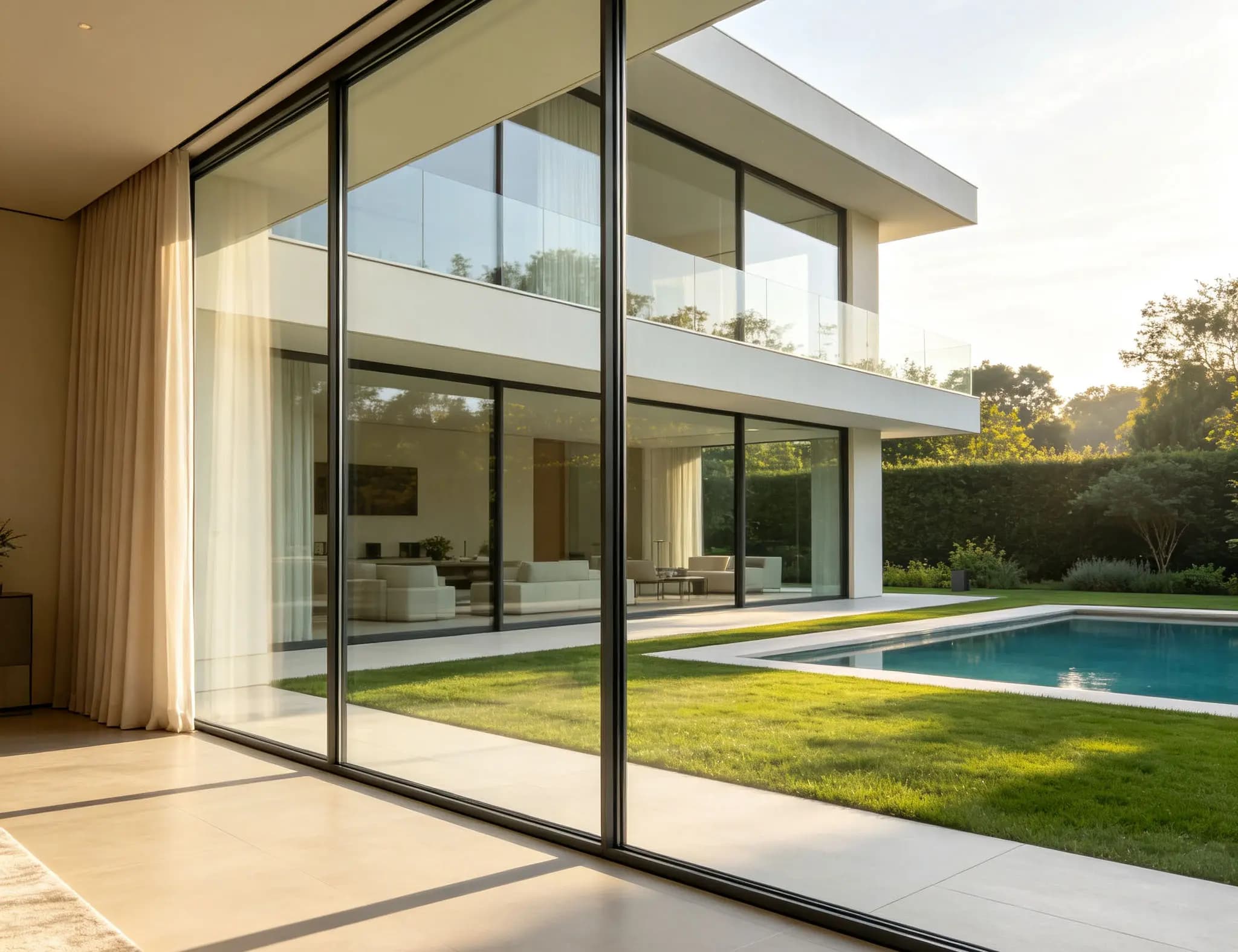
Buy high-quality 2.0mm thermal break aluminium sliding windows from Foshan factory, customized for Nigeria tropical weather, anti-rust & waterproof, full container delivery to Lagos with professional after-sales
I’m sitting here in my office in Foshan City Town, Foshan, and it’s pouring outside—the kind of heavy, humid Southern China rain that makes you want to just grab a cup of tea and stare out the window. I just got off a long WhatsApp call with a client in Lagos who is building a new place in Lekki. He was telling me how frustrated he is with the weather back home lately. During the dry season, the heat is so intense that his AC bills are hitting the roof, and when the rainy season comes, his old windows leak air and rattle like they’re about to fall out.
To be honest, I hear this story almost every week. Working in the building materials export business for as long as I have, especially focusing on West Africa, I’ve seen a pattern. Many Nigerian homeowners spend a fortune on gorgeous Italian marble floors or high-end chandeliers, but then they try to save a few thousand dollars by picking up the cheapest windows they can find at a local market.
It’s a heartbreak waiting to happen. Usually, within three years, those windows start to fade, warp, or the rollers just get stuck because of the dust and salt in the air. Since I’ve got a moment while it’s raining, I thought I’d write down a few thoughts for anyone planning a project in Nigeria. We won't talk about high-level academic engineering today. Let’s just talk about how to actually find a decent aluminium sliding window Nigeria homeowners can actually trust for more than just a couple of seasons.
The "Gauge" Trap: Why Your Window Might Be Shaking

I remember a client from Abuja who came to me last year. He was in a real panic because he’d bought sliding windows locally, and after one big windstorm, the glass panels were shaking so much he thought they’d shatter. I asked him how thick the aluminium was. He told me the seller swore it was 1.2mm. I asked him to get a caliper and measure it while we were on a video call. Guess what? It was barely 0.8mm.
Don't Fall for the Numbers Game

That’s the first big trap: the Gauge. In the local markets around Lagos or Mushin, a lot of sellers will tell you whatever you want to hear just to close the deal. But 0.8mm or 1.0mm aluminium is basically like paper when you’re talking about a large window frame. It just doesn't have the structural "bones" to handle tropical winds or the weight of good glass.
I always tell my clients that if your budget is tight, 1.2mm is your absolute floor. But if you’re building a villa you plan to live in, you really should be looking at 1.4mm or even 2.0mm. Our flagship 120 series here at Bohong, for example, is a solid 2.0mm. When you push that window sash, you feel this heavy, smooth resistance—what we call a "damping feel" in the industry—it’s worlds apart from those flimsy, rattly windows that feel like they’re made of soda cans.
The UV and Salt Problem

I should also mention the sun. The UV rays in Nigeria are brutal. I’ve seen cheap aluminium profiles where the paint starts peeling off in flakes after just two years because the powder coating was low-grade. At our factory, we use a VOC-free powder coating process. Even in a place like Victoria Island where the salt spray from the ocean is constantly eating at everything, I can confidently tell my clients that the finish won't fade for ten years. That’s not just a sales pitch; it’s the feedback I get from people who bought from us five or six years ago and are now coming back to do their second or third project.
Dealing with the Heat: Is "Thermal Break" Worth the Extra Money?
Now, there’s another word that gets thrown around a lot: "Thermal Break." I know, when a Nigerian client hears "Thermal Break," they immediately think "expensive." And yes, it does cost a bit more than standard aluminium. But you have to think about how aluminium works—it’s a conductor. If it’s 38 degrees outside in Abuja, your window frame effectively becomes a heater, pouring that heat directly into your living room. Your AC has to work twice as hard to keep up.

The Science of Staying Cool
A thermal break is basically a high-quality PA66 nylon strip inserted into the middle of the aluminium profile. It acts like a circuit breaker for heat. I had a client in Lekki who installed our 120 series thermal break sliding windows, and he told me that he can now set his AC two degrees higher and it feels just as cool. The money he saves on his electricity bill every month is already paying back the extra cost of the windows. It’s one of those "hidden" benefits that you don't see, but you definitely feel in your pocket every month.
Why the 120 Series is the " King"

Our 120 series is our most popular export product for a reason. It was designed for exactly this kind of market: a serious residential product with a 2.0mm frame that feels solid, blocks the heat, and has enough room for high-performance double glazing. It’s the sweet spot between "budget" and "luxury."
The Mechanics: Why Sliding Windows Rule the Nigerian Landscape
Sliding windows are king in Nigeria. They save space, which is great for apartments, and they allow for great ventilation. But the soul of a sliding window is actually in the rollers and the tracks.
The Hidden Danger of Cheap Rollers
I once had a developer from Lagos complain to me about a project he did with a small local workshop. Within six months, the rollers had rusted shut, and the tenants were complaining they couldn't even open their windows for fresh air. Imagine having a window you can't even open in the Lagos heat!

We use BOGO brand hardware or VBH German-standard accessories. These rollers have to carry the weight of 2.0mm aluminium and double-glazed glass—they have to be tough. We also design our tracks with a hidden drainage system. When those massive Lagos rainstorms hit, the water flows out through the designed channels instead of backing up into your house. You just don't get that level of detail from a "ready-made" window you buy off the shelf.
Glass: Silence, Security, and That Famous Blue Glow
Speaking of glass, that’s another big topic. I still see a lot of houses in Nigeria using single-pane glass or very thin glass. If you want silence and security, you really have to go with double-glazed tempered glass. Our standard is usually a 5mm+12A+5mm setup.
The Color Obsession: LX Gray and Ford Blue

Something I find quite interesting is how much my Nigerian clients love colored glass. The "LX Gray" (Blue Star Gray) and "Ford Blue" are incredibly popular. It’s not just for the look, though they do look sharp. These coatings reflect a huge amount of solar radiation.
But here is a little trade secret: some factories use "offline" coatings that are sprayed on later. Over time, that coating starts to peel off in patches, looking like a bad skin disease. We stick to "online" coating, which is bonded to the glass while it’s being made. It costs us more to produce, but it means your windows won't look "splotchy" five years from now.
The Mosquito and Security Duo
I almost forgot to mention the mosquito problem. Anyone who has spent a night in Lagos knows how serious the mosquitoes are. A lot of local windows come with thin plastic or aluminium mesh that tears if you just look at it wrong, and it offers zero security.

Our 120 series is a triple-track design, which means it has a completely independent track for a high-strength Stainless Steel Mesh (what we call "King Kong mesh"). It’s so thick that mosquitoes can't get in, but it’s also tough enough to act as a first line of defense against intruders. You can leave your glass open for a breeze while you’re out, lock the mesh screen, and feel perfectly safe.
Logistics: Getting Your Container from Foshan to Lagos Port
At this point, you’re probably wondering: is it a headache to buy windows from Foshan and ship them all the way to Nigeria? Honestly, it’s much easier than it used to be. We’ve done this route so many times now that it’s like clockwork.
The Process and the Paperwork
The process is pretty simple: you send me your window sizes or your floor plan, and I’ll get you a quote within 24 hours. I usually base it on a reference exchange rate (around 6.9 right now) so everything is transparent. Once you’re happy, our engineers draw up the "shop drawings"—these are the exact blueprints for every single window.
After a 50% deposit (which goes into our secure Citibank Hong Kong account), the factory gets to work. It takes about 60 working days to get everything perfectly made and packed into those heavy-duty plywood crates. Those crates are non-negotiable for me. They protect the glass and the frames while they’re bouncing around in a container for a month on their way to Lagos. The sea freight usually takes another 25 to 35 days.
The "Wait" is the Hardest Part
I’ve had people tell me they can't wait that long. But I always tell them: you're building a house that’s meant to last thirty or forty years. Waiting an extra two months to get the right quality from the source is a small price to pay for thirty years of peace of mind. If you buy whatever is available today, you’ll be spending your weekends for the next ten years looking for someone to fix a leak or a broken lock.
One thing I should probably mention—and this is a bit of an industry rule that catches people out—is that if a window is smaller than one square meter, we still have to charge for one square meter. It’s just how the production lines work. So if you’re planning a lot of tiny toilet windows, it’s worth keeping that in mind so you don't feel cheated when you see the invoice.
Wrapping Up: Let's Build Something That Lasts
Anyway, the rain is starting to let up a bit here in Foshan. This business is really all about trust and word-of-mouth. My favorite part of the job isn't the big orders; it’s when a client in Lagos sends me a photo of their finished house and says: "Sally, the windows are in. My neighbors keep stopping by to ask where I got them because they look so much better than anything else on the street."
If you’re currently planning a new build in Nigeria, or if you’re a contractor looking for a reliable factory to partner with, feel free to reach out. Whether you want to talk about the latest aluminium sliding window Nigeria trends or you just want to know the difference between two different types of profiles, you can always find me on WhatsApp.
Even if you don't buy from us, I’m happy to help you avoid some of the common pitfalls. It’s always good to have a friend in Foshan who knows the "inside" of the building materials world. Come to think of it, those Lagos winds can get pretty strong near the coast—have you actually measured the thickness of the frames you were looking at? I’m always curious to hear what the "average" quality in the local markets is looking like these days.
I better head down to the workshop now. We’ve got a big batch of 120 series windows with that LX Gray glass heading out to Abuja soon, and I want to make sure the packing is perfect. I’ll try to take a quick video of them before they go into the crates to show you how that gray glass really catches the light.
Wishing you a smooth building process—don't let a bad window choice ruin your dream home!