.webp&w=3840&q=75)
Is It Cheaper to Buy Building Materials from China? The Ultimate Developer's Guide to Quality and Savings
In the competitive landscape of 2026 global construction, the difference between a profitable project and a financial disaster often hinges on one critical factor: procurement strategy. For developers, architects, and private homebuilders, the question "Is it cheaper to buy building materials from China?" has evolved from a simple curiosity into a standard business consideration. The short answer is a definitive yes—but the real value lies in understanding how to navigate the complexities of quality, logistics, and customization to maximize your Return on Investment (ROI).
From the industrial heartland of Foshan to the high-tech manufacturing hubs of Guangdong, China offers a unique combination of economies of scale, advanced technology, and integrated supply chains. By sourcing directly from the source, developers can often realize savings of 30% to 60% compared to local retail prices. However, successfully importing materials like aluminum windows, custom cabinets, and high-end security doors requires more than just looking at the lowest quote. It requires a strategic approach to "Landed Cost" and quality assurance.
The Aluminum Advantage: Why China Dominates the Window and Door Market
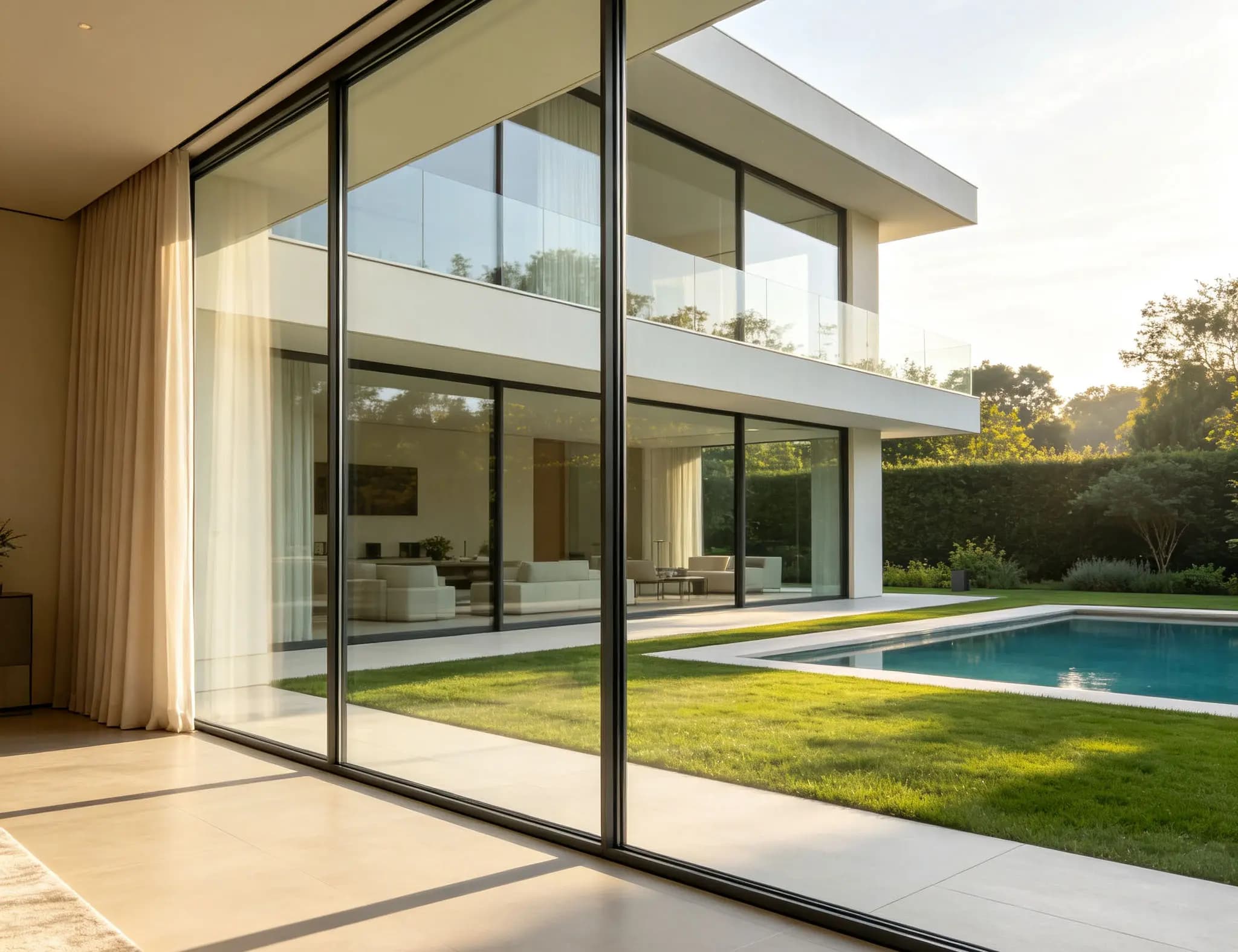
Aluminum windows and doors typically represent one of the most significant line items in a residential or commercial budget. In many local markets, particularly in North America, Australia, and West Africa, high-performance systems like thermal break aluminum are priced as luxury items. In China, these systems are the industry standard.
The primary reason for the price disparity is the concentration of the entire supply chain. In Foshan, a single district may house aluminum extrusion plants, glass tempering facilities, and hardware manufacturers all within a ten-mile radius. This reduces internal logistics costs and allows factories to offer professional-grade 6063-T5 alloy profiles at a fraction of the cost of Western counterparts.
When sourcing aluminum systems, professional developers focus on the "gauge" or wall thickness. While local budget markets often flood projects with flimsy 1.0mm profiles, Chinese export-grade factories specialize in 1.4mm to 2.0mm thickness. These heavier profiles provide the structural integrity needed for large-span sliding doors and high-wind resistance. Furthermore, the integration of European-standard hardware—such as BOGO or VBH systems—ensures that these cost-effective windows operate with the same smooth precision as high-end European brands. For those building in tropical climates, opting for a 120 Series thermal break system with double-glazed reflective glass can significantly reduce long-term energy costs, making the initial import investment even more attractive.
Custom Kitchen Cabinets: Achieving a Luxury Aesthetic on a Builder’s Budget
The kitchen is often described as the heart of the home, but it is also the room most likely to cause a budget blowout. Custom kitchen cabinets are traditionally labor-intensive and expensive to design and install locally. Chinese manufacturers have solved this by combining mass-customization technology with high-quality materials.
By importing custom cabinetry, you gain access to a vast array of finishes that would be prohibitively expensive elsewhere. Whether you are looking for high-gloss lacquer, textured wood veneers, or durable melamine finishes, the sheer variety available in the Chinese market is unmatched. Most modern Chinese factories use advanced CNC machinery to ensure that every panel is cut to the millimeter, following the digital shop drawings provided during the design phase.
One of the biggest concerns for buyers is the durability of the core materials. Top-tier Chinese exporters now focus on E1 or Carb-2 compliant plywood and moisture-resistant boards, specifically designed to withstand humid tropical climates or the dry heat of the desert. When you combine these materials with premium soft-close hinges and drawer slides from brands like Blum or Hettich, the result is a kitchen that looks and performs like a million-dollar installation for a third of the price. The ability to coordinate the cabinetry with other built-in furniture ensures a cohesive interior design that adds immense value to the property.
Shower Rooms and Glass Partitions: Safety Meets Minimalist Design
Modern interior design favors clean lines and transparency, making glass shower rooms and partitions a staple of new builds. The cost of tempered glass in local markets is driven high by specialized handling and low domestic production volumes. China, as the world’s largest producer of glass, offers an incredible price-to-quality ratio in this category.
For a shower room to be both safe and durable, the quality of the tempered glass and the grade of the stainless steel hardware are paramount. Chinese factories producing for the export market typically use 8mm to 12mm thick tempered glass that meets international safety certifications (such as 3C, CE, or SGCC). This glass is often treated with "easy-clean" coatings that prevent lime-scale buildup, a feature that is often a costly upgrade in local retail stores.
The hardware is equally important. In coastal environments, cheap zinc-alloy hinges will corrode within months. Chinese manufacturers specializing in premium shower enclosures utilize 304 or 316-grade stainless steel, ensuring that the minimalist aesthetic remains rust-free for the life of the building. By purchasing these units in bulk for multi-unit developments, the cost per unit becomes so low that it often allows developers to include premium ensuite bathrooms in every bedroom without exceeding the original budget.
Railings and Balustrades: Architectural Elegance and Simplified Installation
Railings and balustrades serve two purposes: safety and curb appeal. The trend toward frameless glass railings has traditionally been expensive due to the cost of thick laminated glass and the precision required for the heavy-duty aluminum base channels.
China has revolutionized this sector by creating "ready-to-install" modular systems. These systems are designed to be bolted down with minimal onsite welding or specialized labor, which is a major cost-saver in regions where skilled trade labor is expensive. Whether you are looking for classic wrought iron aesthetics, sleek stainless steel cables, or modern glass systems, sourcing from China allows for architectural consistency across an entire project.
The price of a frameless glass railing system sourced from a Foshan factory is often 50% lower than the equivalent system at a local hardware chain, even after accounting for the weight of the glass in shipping costs. For high-rise residential projects, these savings can amount to tens of thousands of dollars, allowing for higher-spec finishes in other areas of the building.
Interior Wooden Doors and Security Doors: The First Line of Defense and Style
Doors are the tactile touchpoints of a house. Every time a resident turns a handle, they are subconsciously judging the quality of the construction. Chinese manufacturers offer a two-pronged solution for developers: high-aesthetic interior wooden doors and high-security exterior doors.
For interior doors, the technology has shifted toward "eco-doors" and solid-core composite doors. These are engineered to be stable in varying temperatures, preventing the warping and cracking common with traditional solid timber in African or Middle Eastern climates. The finishes are so advanced that they can replicate the grain of rare oaks or walnuts with stunning accuracy, providing a luxury feel without the environmental or financial cost of exotic hardwoods.
When it comes to the main entrance, security doors from China are in a league of their own. Unlike the simple wooden or light steel doors found in many markets, a professional Chinese security door is a multi-layered system. These doors feature reinforced steel plates, fire-resistant rock wool insulation, and sophisticated multi-point locking systems that engage at the top, bottom, and sides of the frame. The ability to integrate smart locks and biometric entry systems at the factory level—using brands like Tuya or TTLock—adds another layer of value that is highly attractive to modern homebuyers seeking a smart home experience.
Understanding the "Landed Cost": Navigating Logistics and Duties
To truly answer if it is cheaper to buy from China, one must look at the "Landed Cost"—the total price of a product once it has arrived at your doorstep. This includes the factory price (FOB), sea freight, insurance, import duties, and local port handling fees.
Shipping a Full Container Load (FCL) is the most cost-effective way to import. A 40-foot high-cube container can hold a surprising amount of material—often enough to fit the windows, doors, and cabinetry for a large luxury villa or several smaller apartments. By consolidating multiple product categories into a single shipment, you dramatically reduce the freight cost per item. For instance, a developer in Lagos or Abuja can fill a container with aluminum windows from Foshan and supplement the remaining space with lighting, tiles, and bathroom fixtures, maximizing the efficiency of every cubic meter of shipping space.
Import duties vary by country, but even in high-tariff regions, the base manufacturing cost in China is so competitive that the final landed cost remains significantly lower than domestic procurement. The key is to work with a logistics partner who understands the documentation required for smooth customs clearance, such as the SONCAP certification in Nigeria or similar standards in other regions, ensuring that "hidden fees" don't eat into your savings.
Quality Control: How to Source Like a Pro in Foshan
The greatest risk in sourcing from China is not the price, but the potential for a "communication gap." Professional developers avoid this by following a strict sourcing protocol.
First, they target specific industry clusters. For building materials, Foshan is the global capital. By sourcing from a specialized Foshan factory, you are tapping into a workforce that does nothing but produce high-end export goods. Second, they insist on "Shop Drawings." These are technical blueprints generated by the factory that show every dimension, glass type, and hardware brand for every item in the order. Once these are signed off, they become the definitive standard for production and quality inspection.
Finally, transparency in certification is non-negotiable. Whether it’s ISO 9001 for management or specific product certifications like CE for windows or SGCC for glass, a reputable factory will proactively provide these documents. This level of professionalism ensures that the materials you receive are not just "cheap," but are actually superior in performance to what you might find at a local retail outlet.
Conclusion: Maximizing Your Project’s Potential
Is it cheaper to buy building materials from China? When you consider the vast selection, the ability to customize to exact architectural specifications, and the massive economies of scale, the answer is an overwhelming yes. By strategically sourcing aluminum windows, custom cabinetry, shower rooms, and security doors, you are not just saving money—you are reinvesting that capital into the quality and marketability of your project.
In the modern construction era, the most successful developers are those who view the world as their warehouse. By partnering with experienced manufacturers and leveraging the power of direct-factory sourcing, you can deliver premium luxury projects at a budget that would have been impossible just a decade ago. The future of construction is global, and that future begins with smart sourcing from China. By choosing the right partners in hubs like Foshan, you ensure that "cheaper" results in higher quality, better margins, and a superior end-product for your clients.