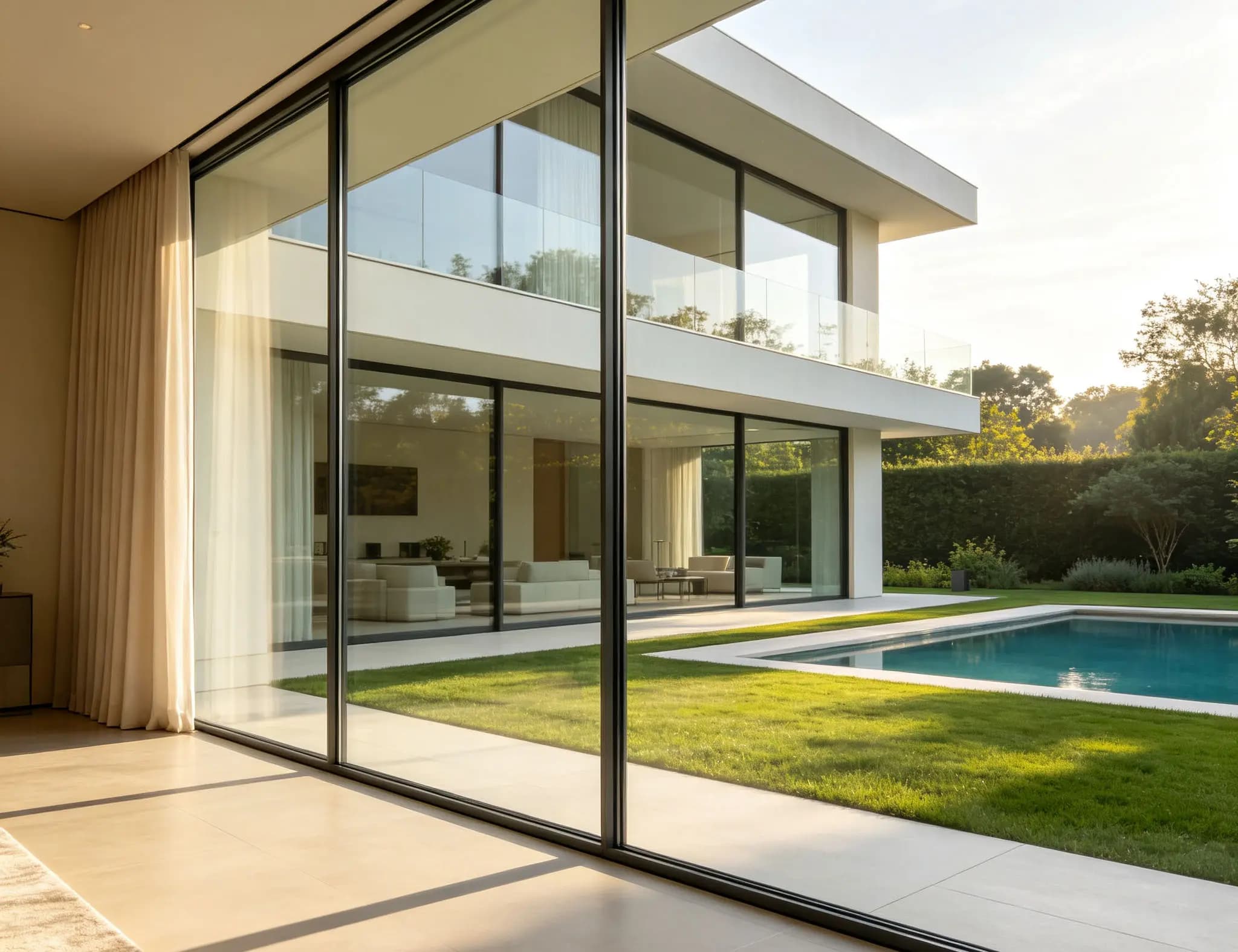
Thermal Break vs. Standard Aluminum Windows: Which High-Performance System Offers the Best ROI for Commercial Projects?
In the high-stakes world of commercial real estate, every dollar spent on the building envelope is a bet on the project's future valuation. For years, the debate has raged: do you go with the lower upfront cost of standard aluminum profiles, or invest in a thermal break system? In 2026, the answer isn’t just about "saving energy"—it’s about cold, hard ROI. If you are a developer looking to flip a property or a long-term asset manager, understanding the gap between Thermal break vs. Standard Aluminum Windows is no longer optional.
1.The Technical Gap: What Are You Actually Buying?
Standard aluminum windows are durable, yes. But they are essentially thermal highways, conducting heat and cold directly into your interior. A thermal break system inserts a reinforced polyamide bar between the interior and exterior profiles, creating a structural barrier. When sourcing energy-efficient commercial aluminum windows, this barrier is what prevents condensation and structural rot in premium interiors.The question for developers isn’t if the tech works, but if the commercial thermal break window cost—which is typically 25% to 40% higher upfront—can be justified by the building's operational efficiency.
We’ve seen commercial projects where switching to a thermal break system increased the property’s re-sale value by 3-5% due to improved energy ratings. When you factor in the thermal break window lifecycle cost, the initial premium is often recouped within 5 to 7 years through HVAC downsizing and energy savings.
2.Calculating the Real ROI: Beyond the Utility Bill
Let’s look at the high-performance window ROI for developers. While standard windows save you CAPEX (Capital Expenditure) in year zero, they degrade the project's Net Operating Income (NOI). In the 2026 market, tenants in Class-A office spaces or premium retail units are demanding lower carbon footprints.
We’ve seen commercial projects where switching to a thermal break system increased the property’s re-sale value by 3-5% due to improved energy ratings. When you factor in the thermal break window lifecycle cost, the initial premium is often recouped within 5 to 7 years through HVAC downsizing and energy savings.
3.The Sustainability Mandate: Why 2026 is Different
Why is the comparison of Thermal break vs. Standard Aluminum Windows peaking now? Because building codes are no longer suggestions. Many regions are introducing carbon taxes on inefficient commercial envelopes. Choosing standard windows today might mean a mandatory (and much more expensive) retrofit in less than a decade.
4.Summary: The Developer’s Final Verdict
If your project is a quick-flip warehouse with no climate control, standard aluminum might suffice. However, for any multi-story office, luxury hotel, or high-end residential complex, the high-performance window ROI for developers is indisputable. Thermal break vs. Standard Aluminum Windows isn't just a choice of material; it's a choice of how you want your asset to perform over the next 30 years.
FAQ: Addressing Commercial Concerns
Q: Is the lead time significantly longer for thermal break systems?
A: Typically, the production of thermal break profiles adds 10-14 days to the manufacturing schedule compared to standard extrusions, as the polyamide strip insertion requires an extra precision step.
Q: Can I use standard hardware on thermal break profiles?
A: Yes, but we strongly advise against it. To achieve the high-performance window ROI for developers, you need hardware that supports the increased weight of double or triple glazing, which is common in thermal break systems.